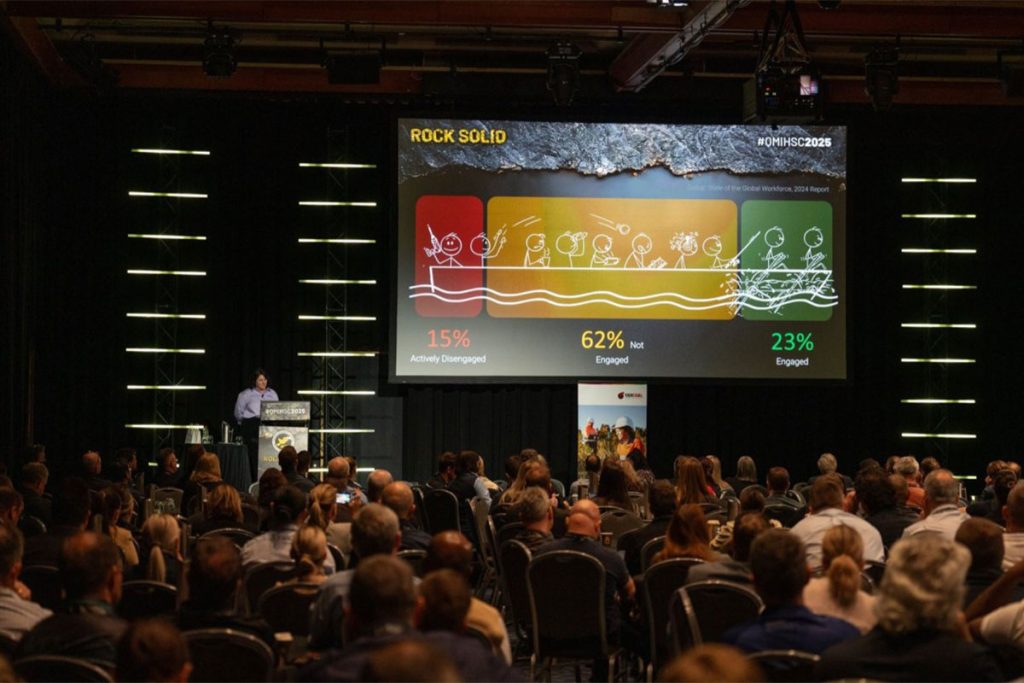
At #QMIHSC25, Lauren Harris explored a truth we see across industries: The greatest lever for safety, performance and culture doesn’t sit in policies or systems. It sits with the frontline leader.
Too often, these leaders are promoted for technical expertise. Yet, the real requirement of the role is people leadership. The gap between task mastery and people mastery is where organisations either thrive or stall.
A technically competent supervisor who hides behind a desk can miss the heartbeat of their team. By contrast, a people-focused leader in the field, is visible and approachable, asks curious questions like “What are you seeing that I’m not?” and recognises effort as well as outcomes. These everyday actions reduce threat, increase reward and over time build trust, ownership and pride – the very foundations of a strong culture.
Culture is not inherited, it’s shaped daily.
Many leaders assume culture is something handed down. A set of values or behaviours imposed from the top. But culture is not static. It is actively created in the daily interactions between leaders and their teams.
Every question asked, every piece of feedback given, every recognition offered these are the micro-moments that compound into culture.
The Neuroscience of Engagement
Neuroscience tells us that human behaviour is guided by two primal drivers: reduce threat, increase reward.
In the workplace, threat feels like being dismissed, ignored or treated unfairly. Reward feels like being recognised, respected and supported. When leaders focus narrowly on tasks, they inadvertently amplify threat. When they focus on people, they unlock reward and the results are profound.
Research from Gallup highlights that disengagement costs the global economy $8.9 trillion annually. Yet, when employees are engaged, organisations experience a 63% decrease in safety incidents, a 68% increase in wellbeing and significant gains in retention, productivity and profitability.
From Task Focused to People Focused
Lauren outlined five principles that enable frontline leaders to make this shift:
- Be Valuable – provide meaning and support beyond the task
- Be Curious – ask questions and listen deeply
- Be Visible – show up where the work happens
- Be Connected – know the person, not just the role
- Be Consistent – create fairness and trust through reliability
These are not “soft skills.” They are strategic skills – the skills that build capability, safety and sustainable performance at scale.
#theCTYeffect
At CTY, we believe transformation is not rolled out via slogans, posters, or campaigns. It is modelled. Daily. By the people leading the work.
Organisations that equip their frontline leaders with people-first skills aren’t just improving culture. They’re securing the foundations of safer, stronger, more resilient operations.
You can watch Lauren’s full #QMIHSC25 presentation here: